Mish Weaver is an artist, director, designer, and educator working across performance, education, and community engagement since 1993. Her practice focuses on mental health, disability access, and climate psychology, with audience engagement at the core.
Ongoing engagement projects include Waiting Song, an outdoor performance inviting conversations about positive futures; Mummy, what is wrong with that man’s legs?, an Unlimited/Oxford University commission for Head Over Wheels exploring access and social models of disability in schools.
Mish has created accessible and inclusive work with partners including No Fit State Circus, KLVD, Articulture, Wales Outdoor Arts Consortium, British Council, Imagineer, Gravity and Levity, and special school Ysgol y Gogarth. Her CV include tactile and audio-described environments for visually impaired performers and audiences, large-scale community performances, and street-based engagement projects.
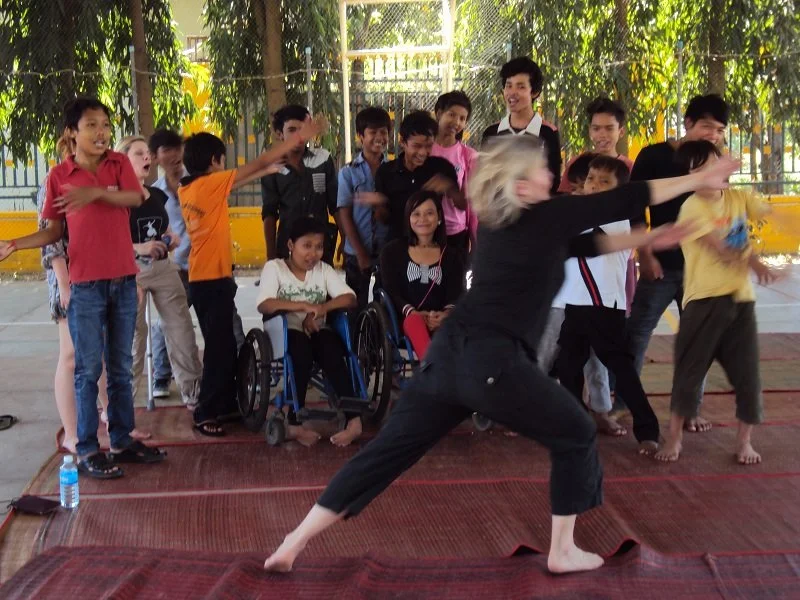
Mish has held teaching and leadership roles at the National Centre for Circus Arts and Bath Spa University (Circomedia), and has delivered education work within prisons, community settings and projects across the UK, Nepal, Cambodia and Stockholm.
Mish’s work aims to be deeply prosocial, using creativity to open dialogue, challenge assumptions, and create moments of connection and joy. Mish’s education cv is available on request.
Currently Mish is developing her engagement ambitions around two themes:
The experience of hopefulness - identifying what we hope for and experiencing the effect of believing that good things are coming up. Waiting Song is the public-facing outcome of this, and we are further developing our approach to conversations with strangers, and wrap-around style of activities/workshops that might accompany Waiting Song to outdoor festivals.
Hope
Box of Frogs animations
For Box of Frogs 2027 Mish will be building a new model of engagement. We will explore neurodivergence and how it may affect physical behaviour, in order to recognise and destigmatise. Through the use of circus vocabularies, such as extreme movement, exhibition of strength, flexibility or dexterity, we will celebrate how the way that one’s brain works might affect the amazing things you can do with your body.
The 2026 phase will involve consultation with a clinical psychologist to inform workshop planning. Working with partner organisations, we will identify groups to take part in workshops exploring mental states, perceptions of mood disorders, and emotional experiences. Participants will use short movement sketches to express a chosen state of mind, leading to the creation of simple stop-frame animations using inanimate objects.